


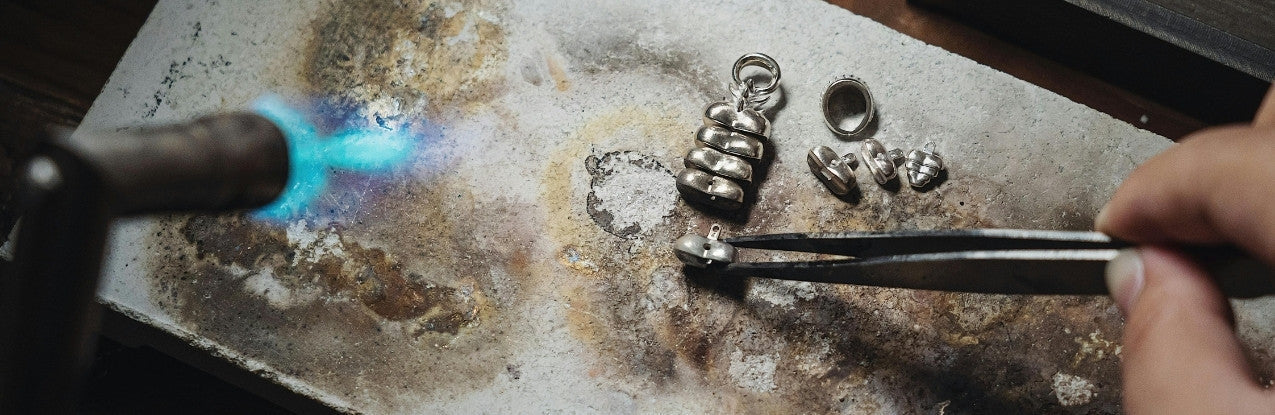
The melting point of silver is 961.8°C, the temperature at which pure silver transitions from solid to liquid. If you want to melt or cast silver yourself, this number determines the equipment you need: a melting furnace that can reach well above that point, plus a crucible that can withstand the heat.
What is the melting point of silver?
The melting point of silver is 961.8°C (1763.2°F). At this temperature, pure silver, also known as 99.9% fine silver, transitions from solid to liquid.
Silver only boils around 2162°C, so between the melting point and the boiling point, you have ample margin to keep the metal liquid and cast it. This makes silver pleasant to work with: it melts at a lower temperature than many other metals, while not evaporating quickly.
For jewelry, bars, and industrial applications, this number is always the starting point. If you know the melting point, you know which furnace and crucible can handle the job.
What factors determine the melting point of silver?
The melting point of silver primarily depends on its purity and alloy. Pure 99.9% silver melts consistently at 961.8°C, but as soon as you add other metals, that point shifts.
Impurities and alloying metals such as copper disrupt the crystal lattice and lower the temperature at which the whole becomes liquid. Pressure hardly plays a role in practice: under normal workshop conditions, the melting point barely changes due to it.
The two buttons that really matter are therefore the silver content and the metal with which it is alloyed. Below you can see how this works out for an alloy and for sterling silver.
How does a silver alloy change the melting point?
A silver alloy lowers the melting point because the added metal interrupts the pure crystal lattice. Copper is the most commonly used alloying metal: it makes silver harder and stronger, but also ensures that the mixture becomes liquid earlier than the 961.8°C of fine silver.
The more alloying, the lower the melting point usually turns out to be. If you are going to remelt an old alloy, check the content beforehand, because an unknown composition melts at a different temperature than you expect.
What is the melting point of sterling silver?
The melting point of sterling silver is around 893°C, lower than that of pure silver. Sterling silver contains 92.5% silver and 7.5% copper, recognizable by the 925 stamp.
That small proportion of copper lowers the melting point by almost seventy degrees compared to fine silver. For silversmiths, this is useful for soldering, but more difficult for casting: sterling becomes liquid faster and therefore requires precise temperature control.
What temperature is needed to melt silver?
To melt silver, you need a heat source that reaches well above 961.8°C. Reaching the melting point is not enough: you want a margin so that the silver becomes completely liquid and remains so during casting.
For small quantities, such as a single ring, a powerful gas torch often suffices. If you want to melt larger pieces or multiple bars, a melting furnace is more reliable because it keeps the temperature constant.
Separate gas torches are available in different capacities, matched to the mass you want to heat. Always keep an eye on the temperature with a pyrometer or the oven's meter, as overheated silver will be lost.
How do you recognize that silver is melting?
You recognize the melting point of silver because its surface first becomes shiny and the metal then collapses into a liquid, moving droplet. Just before that moment, the silver glows orange-red.
Then calmly continue heating the crucible until the mass is completely liquid and contracts into a reflective puddle. Keep the flame or element evenly distributed so that the silver melts everywhere at once and does not locally overheat.
If you are working with an alloy, the components do not melt at exactly the same time, so stir the mass briefly for a uniform whole. As soon as the metal flows evenly, it is ready for casting.
Safely melting silver in the workshop
Safely melting silver starts with the right protection and a tidy, ventilated workplace. Liquid silver is hotter than 961.8°C and causes severe burns on contact, so wear heat-resistant gloves and a face shield or safety glasses.
Only handle the crucible with appropriate crucible tongs and prepare a fireproof surface. Make sure your material is dry: moisture in the crucible or mold can cause the molten silver to splatter.
Pour the liquid metal calmly into a preheated mold and let it cool completely before touching it. Never work alone and keep a fire extinguisher within reach.
If you know the melting point of silver, you can more precisely choose the furnace, crucible, and protective equipment that suit your work. Browse Parrot Shopping's range of melting and casting equipment and set up your workshop step by step.


