


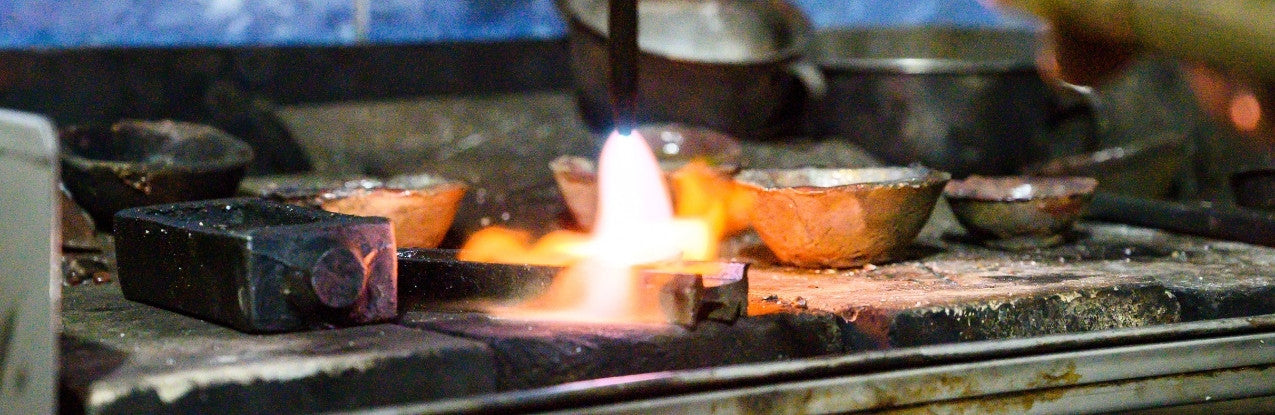
The melting point of copper is 1084.62 °C, the temperature at which pure copper transitions from solid to liquid. If you want to melt and cast copper yourself, you will need an oven that can reach well above that temperature, such as a gas-fired or electric melting furnace. In this guide, you will learn the exact value and what you need to melt it.
Why is the melting temperature of copper important?
The melting temperature of copper determines which oven and energy source you choose and how you process the metal. When casting, good temperature control is necessary for complete mold filling and strong bonding. If the temperature is too low, you will get porous castings; if it's too high, oxidation will occur.
If you are casting a small part or a piece of jewelry, you want the copper to be just liquid enough to completely fill the mold. The melting point also plays a role in soldering and welding, as you connect the copper without unintentionally melting the base material. Knowing the melting temperature allows you to make more informed choices about your tools and working temperature.
The energy source also makes a difference. A gas-fired melting furnace is popular for copper, while an electric melting furnace gives you more control over the temperature.
The melting point of copper alloys
Copper alloys do not have a fixed melting point but a melting range, because the added metals spread the transition over a number of degrees. The composition determines where that range lies. Well-known examples are brass and bronze.
For brass, an alloy of copper and zinc, the melting point is between 900 and 940 °C. For bronze and copper, the melting point is higher, namely between 950 and 1050 °C. Beryllium copper, with a range between 870 and 980 °C, is somewhat lower.
The melting point of an alloy is therefore below that of pure copper, which is useful if you want to cast at a lower temperature. For decorative casting, you often choose bronze or brass because they flow more easily and require less heat than pure copper.
What is the melting point of red copper?
Red copper is pure, unalloyed copper and therefore melts at the same 1084.62 °C. The name refers to the characteristic reddish-brown color of the metal in its pure form. So there is no separate melting point for red copper: it is simply pure copper.
As soon as you alloy copper with zinc, tin, or nickel, the melting point shifts to a lower range. Red copper remains the reference: the unprocessed starting point against which you compare alloys. For those who want to cast purely, this is the material with the highest and most predictable melting point.
How do you melt copper in your own workshop?
To melt copper, you need a melting furnace, a crucible, and the right protection. Because copper only becomes liquid at 1084.62 °C, your furnace must be able to reach well above that point. A setup that only melts aluminum will not reach that temperature.
A good crucible must withstand this heat and can handle a range up to 1600 °C, with enough margin above the melting point of copper. The liquid copper is then poured into a mold made of graphite or sand, which you can find among the casting molds.
Keep in mind that copper oxidizes quickly at high temperatures; a layer of borax on the melt bath limits this and keeps the copper cleaner.
Just starting with melting? Then you can get the basics right away with a complete melting package from Parrot Shopping, in which the oven, crucible, and tools are matched to each other. This way, you can safely work on your first casting, with the right heat for copper.


